When renovating a sports facility, people often think first about the pitch, lighting, changing rooms or scoreboards.
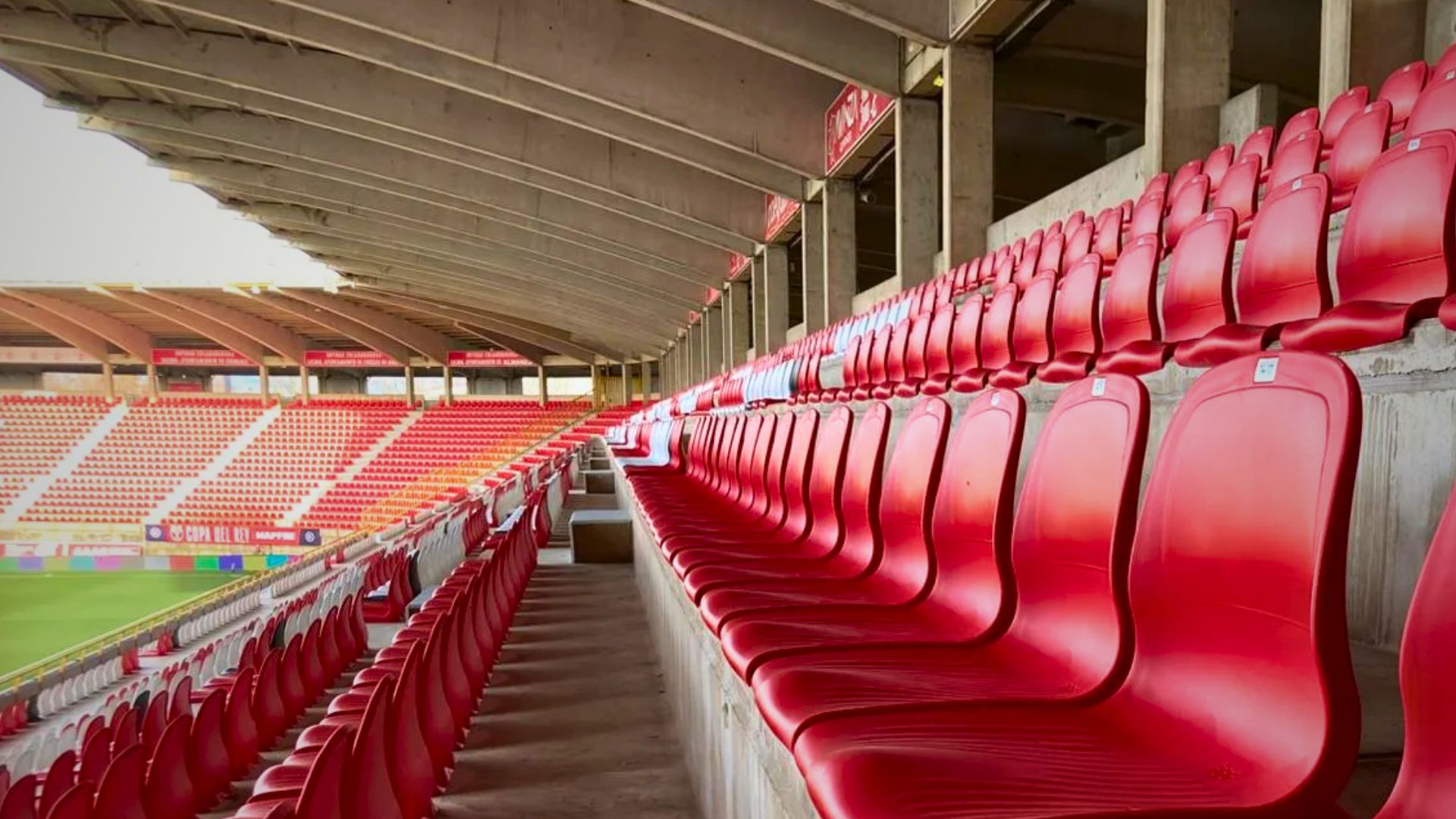
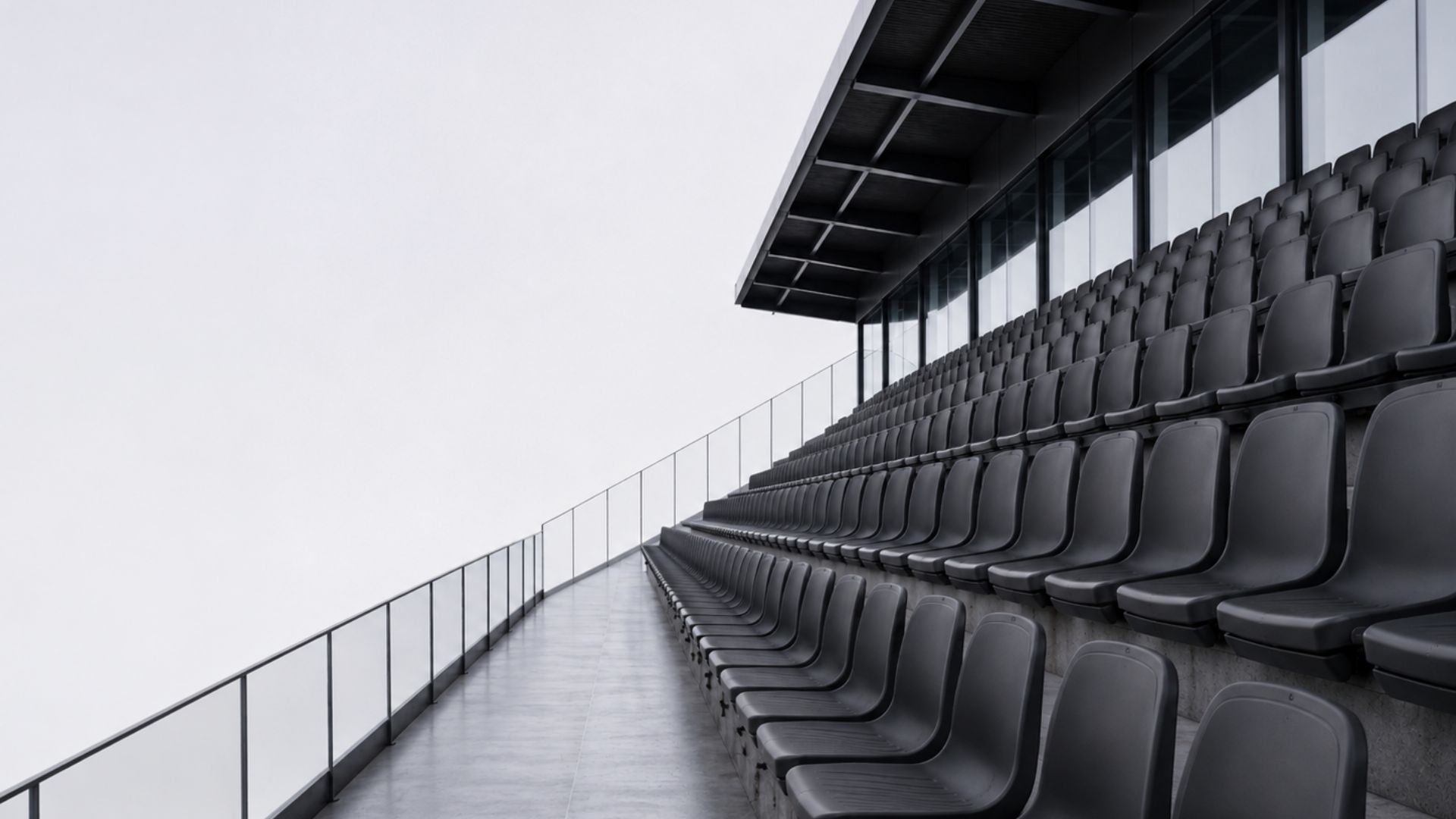
But there is one element that directly influences the image of the venue, spectator safety and the experience of every match: grandstand seating.
A grandstand is not just a structure where fans sit. It is part of the club’s identity, the perceived quality of the facility and the way each match is experienced.
That is why choosing the right seats should not be a decision based solely on price.
What good grandstand seating should provide
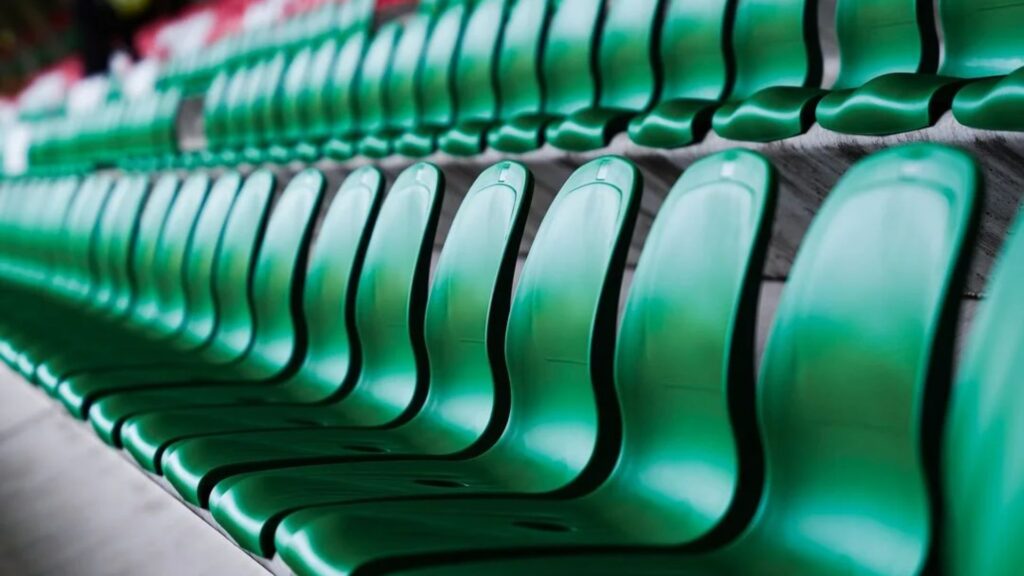
A grandstand seat must meet much more than an aesthetic requirement. It must be designed to withstand intensive use, outdoor conditions, temperature changes, frequent cleaning and thousands of spectators over many years.
The most important aspects to consider are:
- Resistance and durability under continuous use.
- Materials suitable for outdoor use and sun exposure.
- A fixing system adapted to the existing grandstand.
- Comfort and ergonomics according to the type of facility.
- Customisation of colours, numbering and layout.
- Ease of maintenance and replacement.
- Adaptation to the technical requirements of each project.
Not all facilities have the same needs. A municipal football ground, a sports hall, a professional stadium or a university sports facility require different solutions.
Types of grandstand seating
The choice will depend on capacity, type of spectators, available budget, typical use of the facility and the characteristics of the grandstand itself.
Backless seats
They are a practical solution for facilities where optimising space and maintaining good seating capacity are priorities.
They are commonly used in shallower grandstands, municipal football grounds, training facilities or spaces where spectators remain seated for shorter periods.
Their main advantage is that they make better use of each row and help reduce the overall project cost without compromising a neat and professional appearance.
Low-back seats
They offer a very effective balance between comfort, resistance and efficient use of space.
They are suitable for football grounds, sports halls, sports courts and grandstands where the aim is to improve the spectator experience without excessively increasing the depth of each row.
They also make it possible to create attractive visual compositions through colour combinations, differentiated areas or designs linked to the club’s identity.
High-back seats
They are designed for facilities where spectator comfort is a higher priority, particularly in venues where spectators remain seated for long periods, higher-category stadiums, premium areas or grandstands subject to intensive use.
The high backrest improves comfort and gives the facility a more refined appearance.
In many cases, it can also be used to differentiate specific areas such as main stands, boxes, VIP areas, press sections or premium seating areas.
Tip-up seats
Tip-up seats are an interesting alternative when there is a need to optimise space between rows or facilitate spectator circulation.
They can be particularly useful in indoor facilities, sports halls, multi-purpose venues or areas where a more stadium-like experience is required.
The choice of this type of seat should be considered together with the grandstand layout, row depth and the venue’s evacuation requirements.
The importance of adapting the seat to the facility
One of the most common mistakes is choosing a standard model without considering the type of grandstand on which it will be installed.
Before making a decision, it is important to analyse:
- The geometry and slope of the grandstand.
- The available depth per row.
- The type of existing support or structure.
- Whether the facility is indoors or outdoors.
- The level of exposure to sunlight, rain or humidity.
- The expected number of spectators.
- Numbering requirements.
- Accessible areas and reserved spaces.
- The corporate colours of the club or municipality.
A well-designed facility is not the one with the greatest number of seats. It is the one that provides a coherent, safe, visually attractive layout suited to the actual use of the venue.
Grandstand seating that reinforces the club’s identity
The colours of a grandstand are not simply a decorative detail.
In a stadium or football ground, the seats can become an extension of the identity of the club, city or sporting organisation.
A well-planned colour scheme makes it possible to:
- Reinforce corporate colours.
- Create permanent mosaics.
- Integrate crests, initials or significant dates.
- Differentiate seating sectors or areas.
- Improve the appearance of the venue in broadcasts and photographs.
- Create a more polished impression even when the grandstand is not full.
The grandstand is part of the visual experience of the match. It also influences the impression received by sponsors, media, visitors and supporters.
Renovating a grandstand is much more than replacing seats
When a facility has deteriorated seats, outdated colours, broken units or a poorly designed layout, the problem is not purely aesthetic.
An ageing grandstand conveys a lack of maintenance and can affect comfort, visual consistency and the overall perception of the venue.
Renovation makes it possible to improve several aspects at the same time:
- Modernise the appearance of the facility.
- Improve spectator comfort.
- Reinforce the club’s identity.
- Improve organisation through seat numbering.
- Replace damaged elements.
- Adapt areas to new uses.
- Prepare the venue for new sporting or institutional objectives.
In many cases, there is no need to transform the entire facility from scratch. A well-planned project can renovate specific sections, extend existing areas or progressively upgrade the grandstand according to priorities and budget.
How to choose a grandstand seating company
Beyond the seat model itself, it is important to work with a supplier capable of supporting the entire process.
It is not simply a matter of purchasing seats. It is about designing a solution that works in the real conditions of the venue.
A specialist company should be able to help define:
- The most suitable model.
- The layout of the rows.
- The fixing system.
- The colour combination.
- Numbering and signage.
- Future replacement of individual units.
- Installation and project coordination.
- Adaptation to the technical requirements of the space.
Experience in real projects makes the difference. Every grandstand has its own particular characteristics and every facility requires a different solution.
Grandstand seating designed to last
At Fanbase, we provide grandstand seating solutions adapted to football grounds, sports halls, municipal facilities, sports clubs, university venues and large-capacity projects.
We analyse each facility to define the model, layout, colours and necessary elements so that the grandstand not only fulfils its function, but also becomes part of the identity of the space.
Because a grandstand should not be a secondary element.
It should be designed to endure, to represent and to make every supporter feel at home.
Are you planning to renovate, expand or improve your sports facility?
Contact our team and we will help you identify the best solution for your grandstand.